

Elbow Pain in Golfers: Why It Happens and What You Can Do About It
If you’ve been playing golf for a while, there’s a chance you’ve felt an ache or sharp twinge around your elbow after a range session or a round. You’re not alone. Elbow pain is common in golf and other swing sports like tennis and baseball because the same muscles and tendons in your forearm and elbow are stressed over and over again at high speed.
You might feel:
Pain on the inside of the elbow (often called “golfer’s elbow”)
Pain on the outside of the elbow (often called “tennis elbow,” but golfers get this too)
This guide will help you understand:
Why your elbow may hurt
How and why it happens
What you can do to help it
Why staying consistent with good habits is more powerful than any quick fix

Written By: Coach Brian Arellano, Strength & Conditioning Coach at Los Altos.
Why Your Elbow Might Hurt
Elbow pain in golfers is usually a load problem. That means the tissues around the elbow are being asked to do more than they’re currently prepared to handle.
Common reasons include:
Repetitive swinging: Hitting lots of balls with the same motion, especially when you’re tired or not fully warmed up, can irritate the tendons that attach near your elbow. Over time this can become a tendinopathy.
Swing mechanics: Casting the club, flipping the hands through impact, or hitting many heavy shots increases braking forces through the forearm muscles and elbow.
Practice surface: Mats can send more shock through the arms on fat shots, while grass allows the club to dig and slide more naturally.
Lack of strength and support: If shoulders, forearms, grip, and core are not strong enough, the elbow often becomes the weak link.
The big picture: elbow pain usually results from a mix of high volume, imperfect mechanics, and not quite enough strength and preparation.
How Training Can Help: Eccentric and Isometric Exercises
Two training methods that are especially helpful for elbow issues are eccentric and isometric exercises. You don’t need advanced training knowledge to use them—just a basic understanding of what they are and why they work.
Eccentric Training: Slow, Controlled Lowering
Eccentric exercise focuses on the lowering portion of a movement where the muscle works while lengthening. For the elbow, this often involves slowly lowering the wrist with a light weight.
Why it helps: Research on tendinopathies shows that eccentric loading can help reduce pain while improving strength and function when performed consistently.
Simple example for golfers:
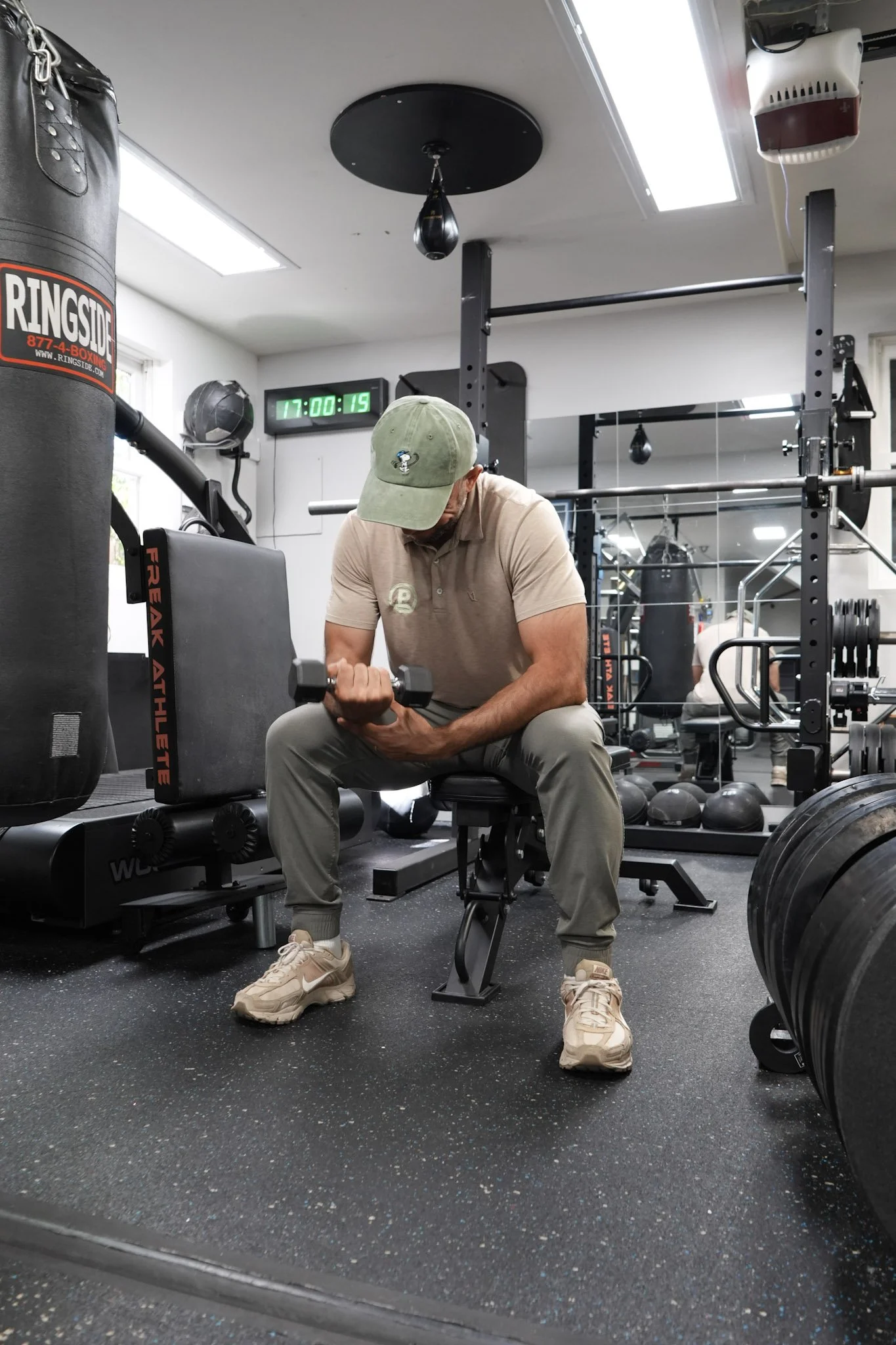
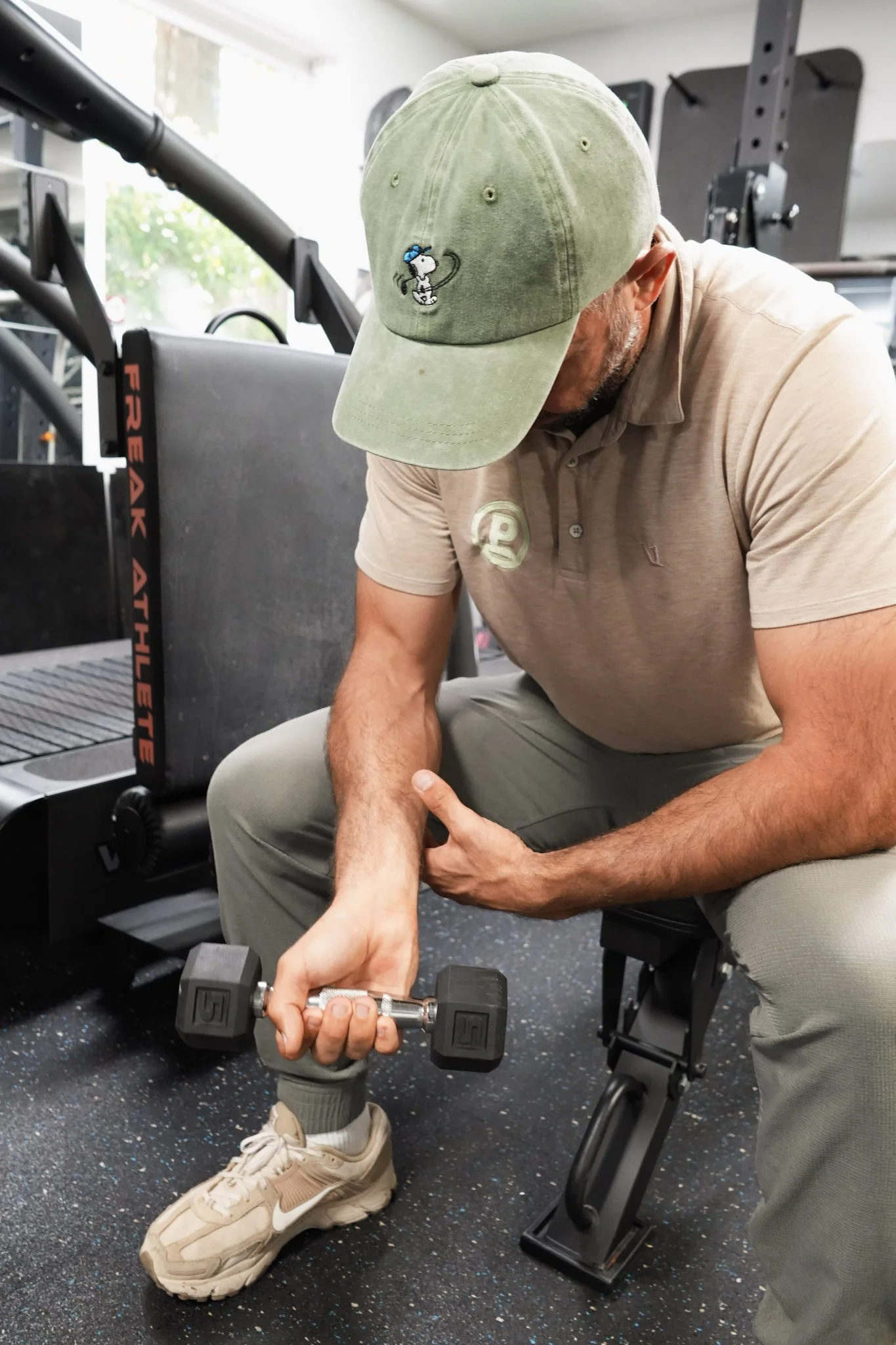
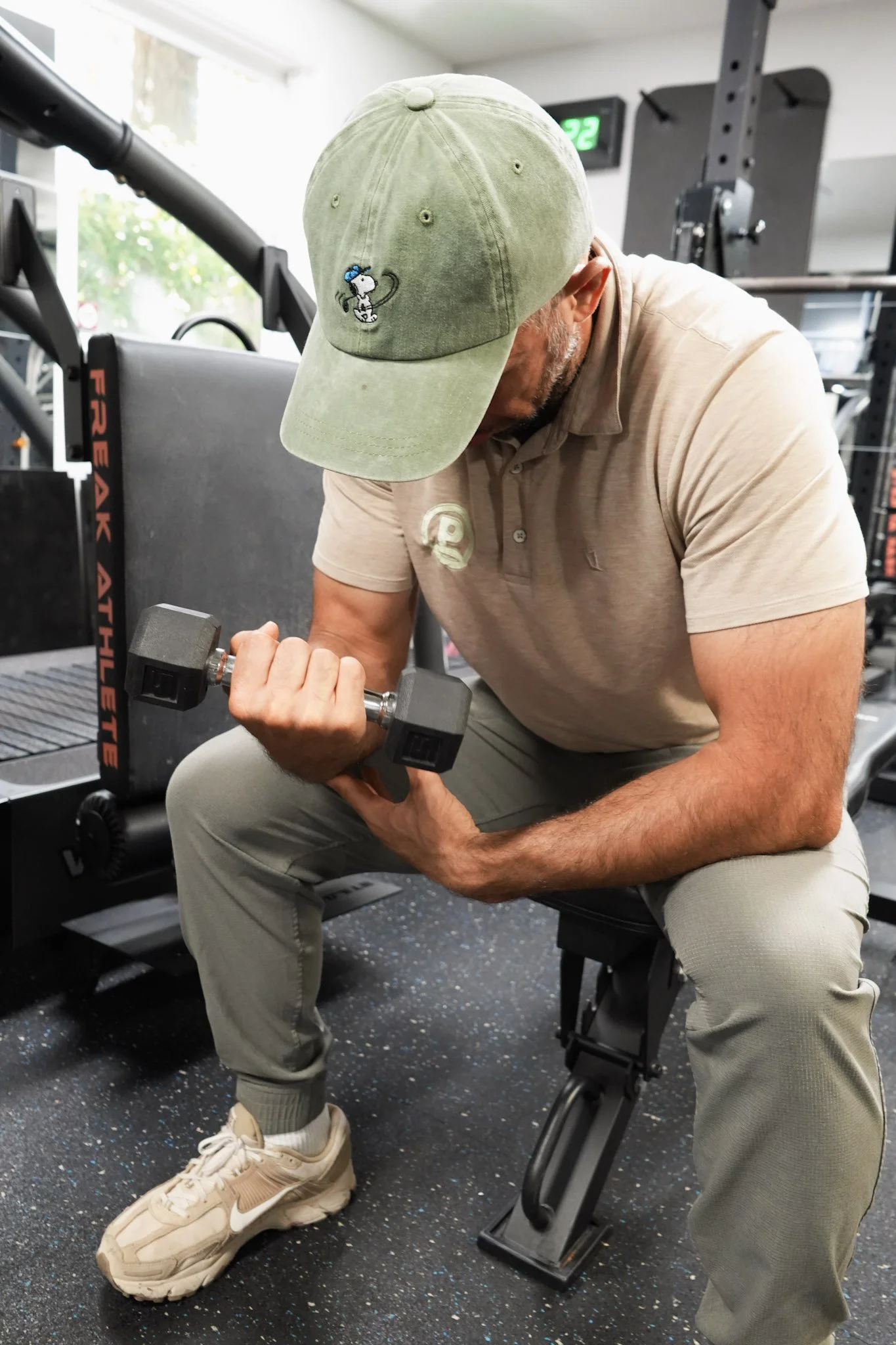
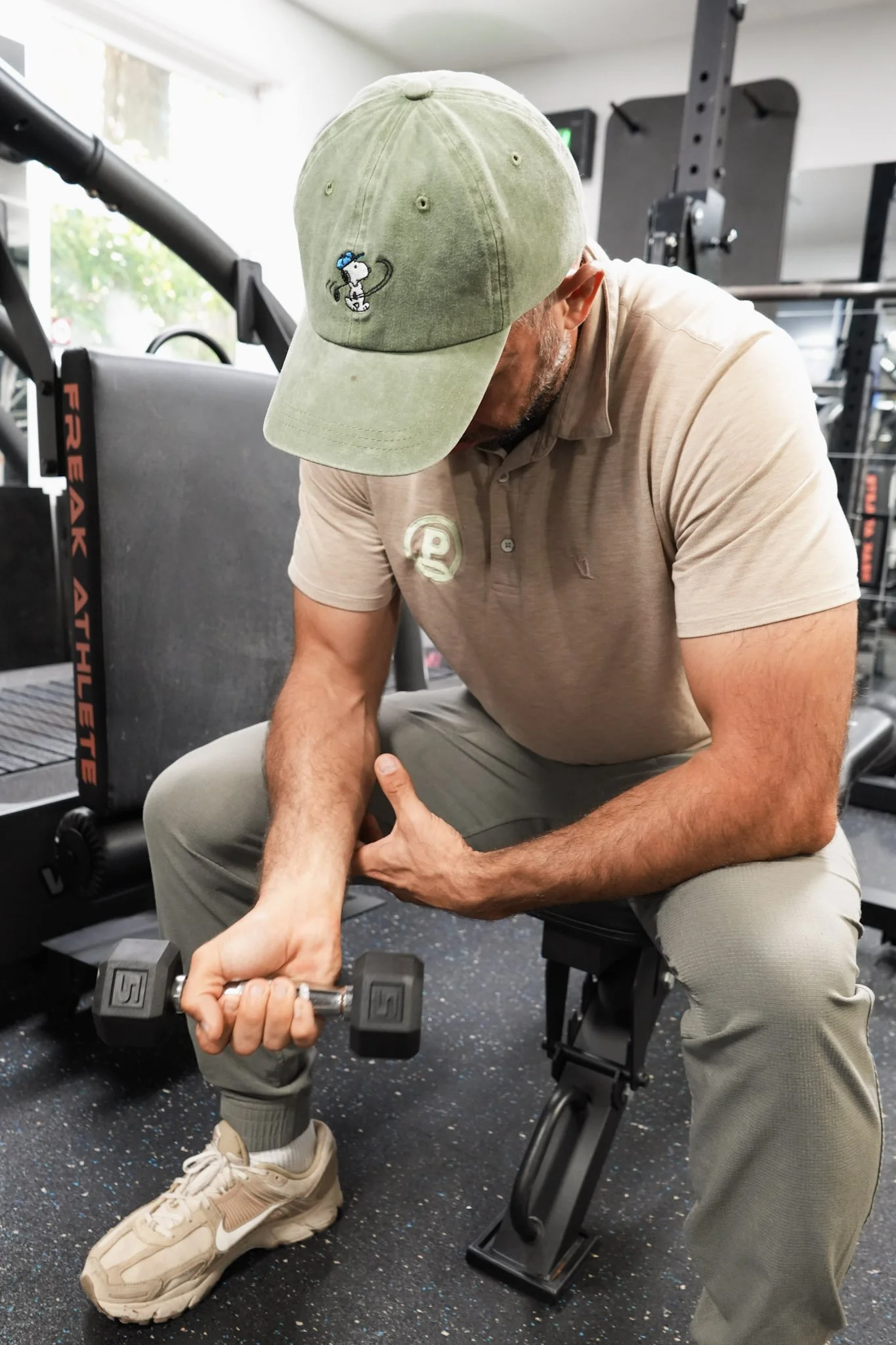
Sit with your forearm resting on your thigh, palm up, holding a light dumbbell.
Use your other hand to help lift the weight.
Let go and slowly lower the weight over 3–5 seconds.
Stay within mild discomfort, not sharp pain.
Repeat for multiple sets and reps a few times per week if cleared by a professional.
You can also perform the exercise with the forearm palm down to target the outside of the elbow.
Isometric Training: Hold Without Moving
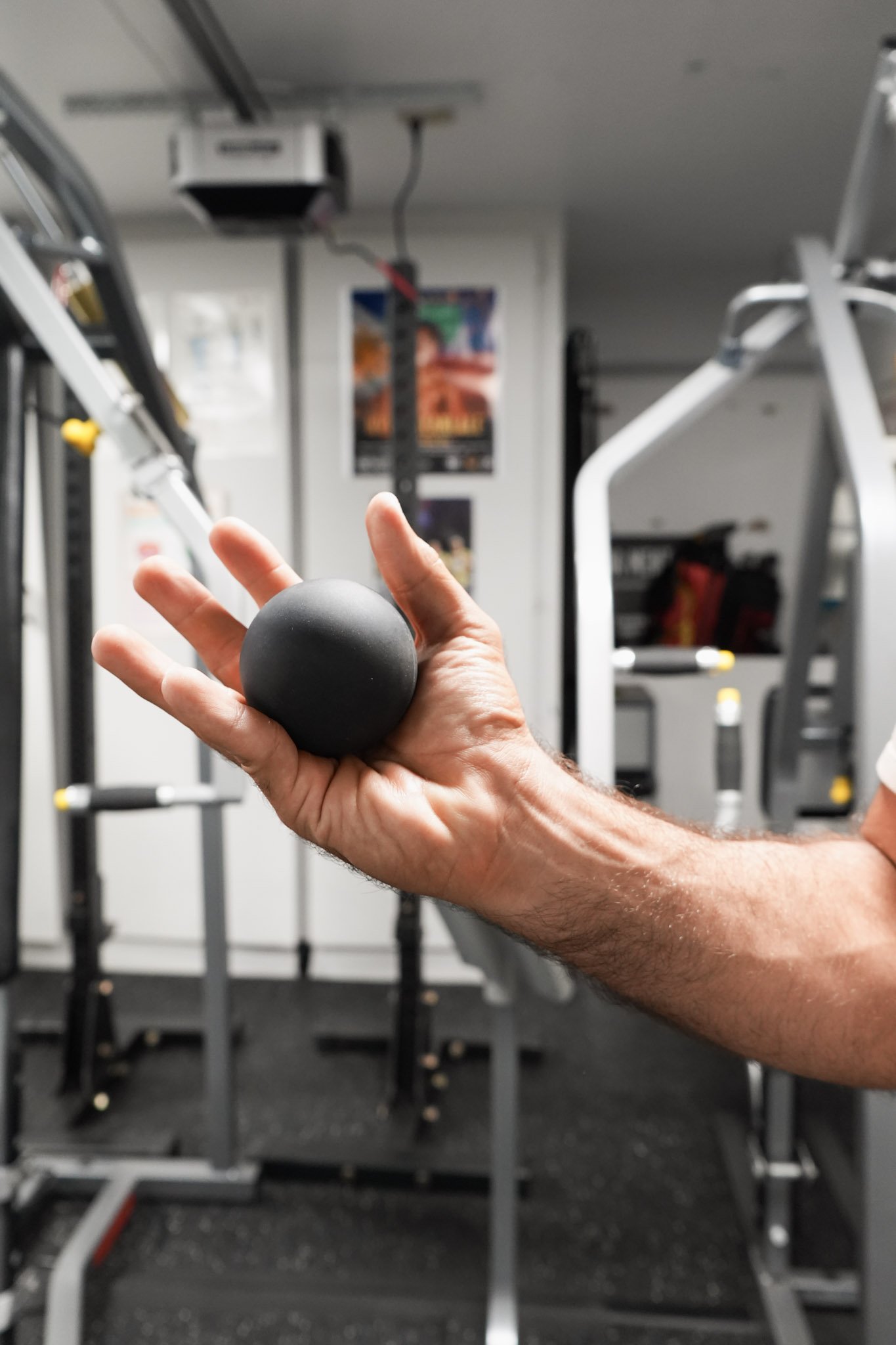
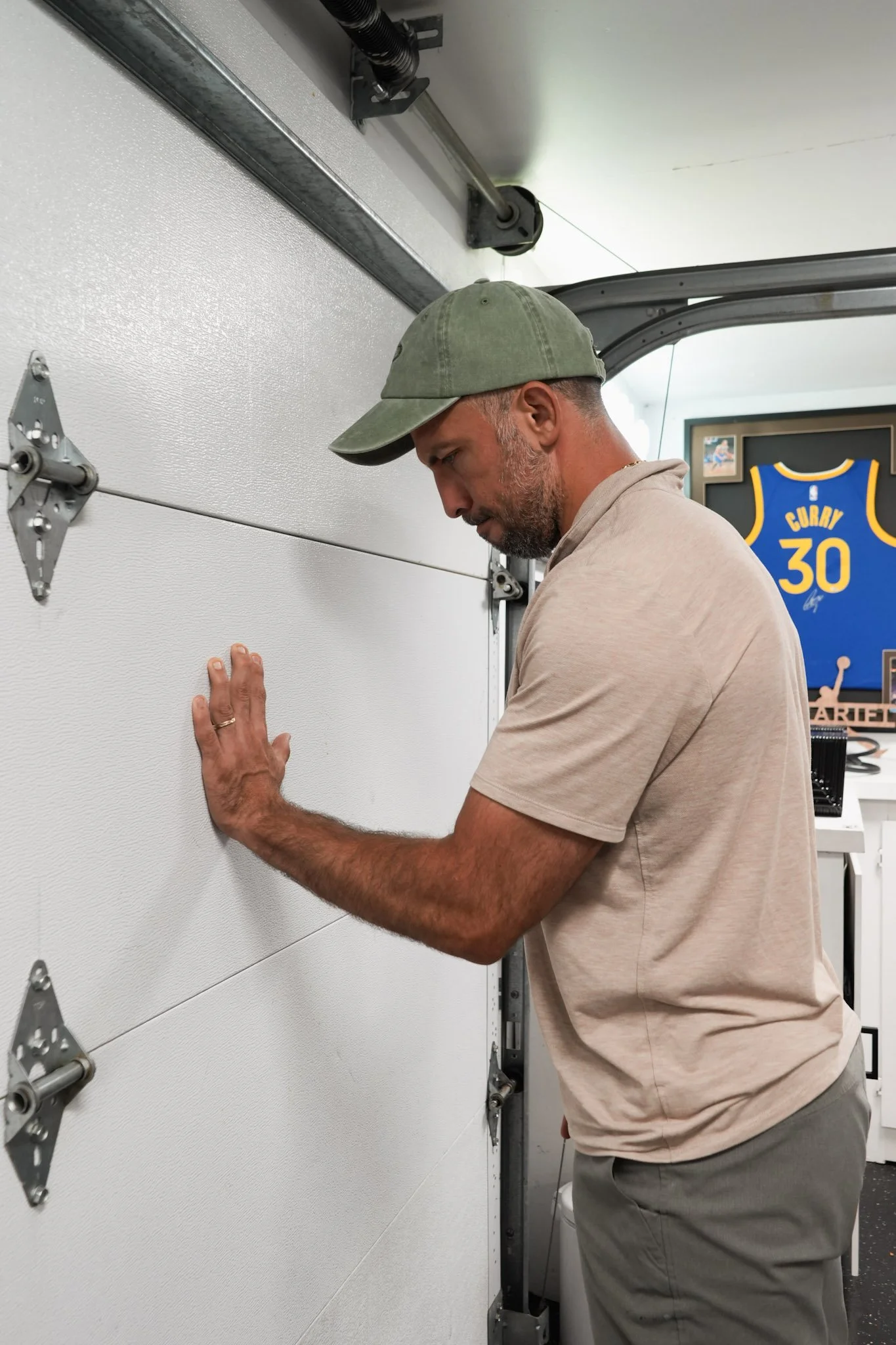
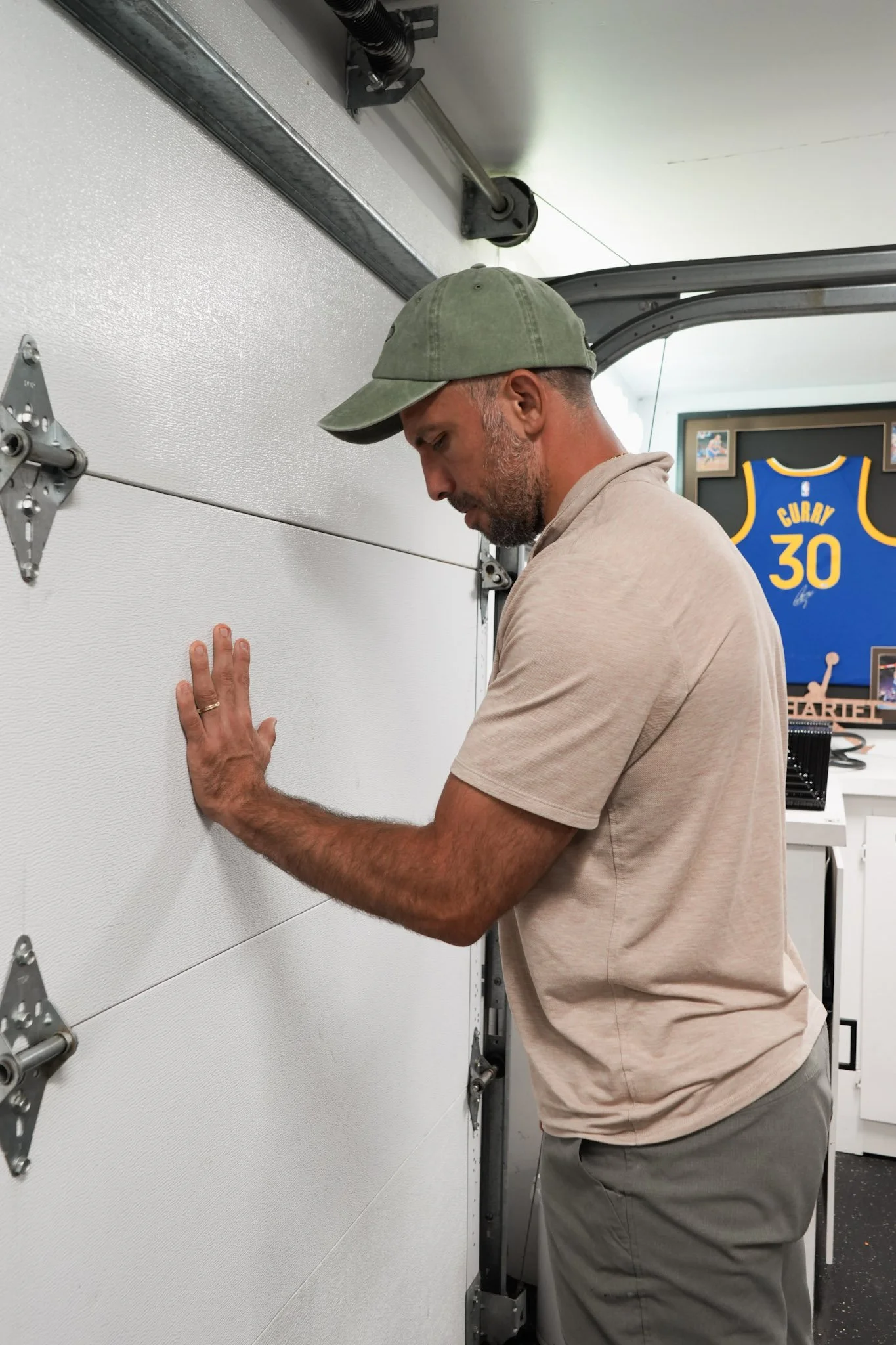
Isometric exercises involve creating tension without moving the joint—like pressing against a wall or squeezing a ball.
Why it helps: Heavy isometric holds can reduce pain temporarily and improve muscle activation around painful tendons.
Simple examples for golfers:
Towel or ball squeeze: Grip for 10–30 seconds, then relax.
Wall press: Press palm or back of the hand into a wall for 10–30 seconds without movement.

Supporting the Elbow: WholeBody Strength and Smarter Practice
Shoulders and upper back: Rows, band pulls, and light pressing distribute force more evenly.
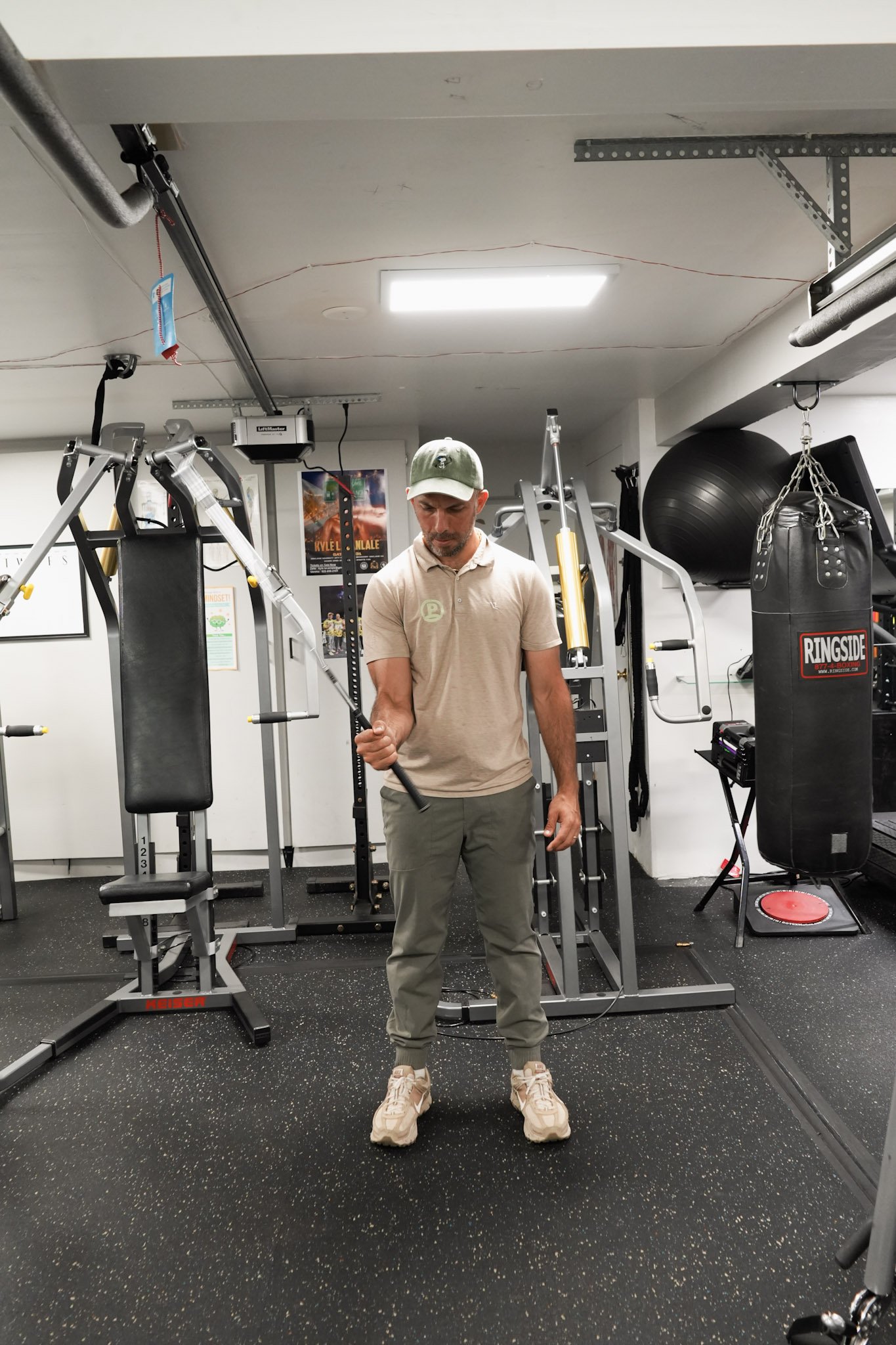
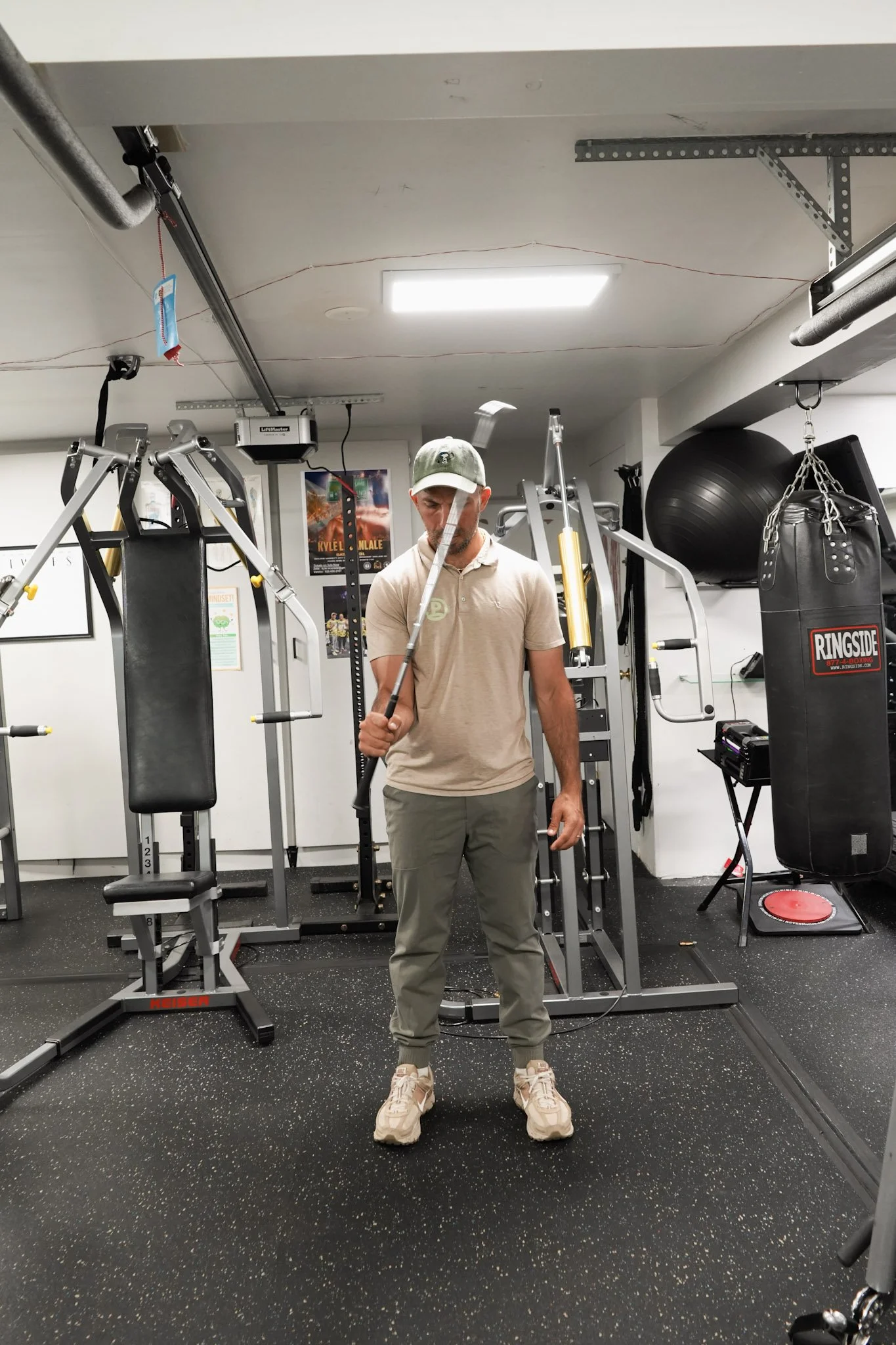
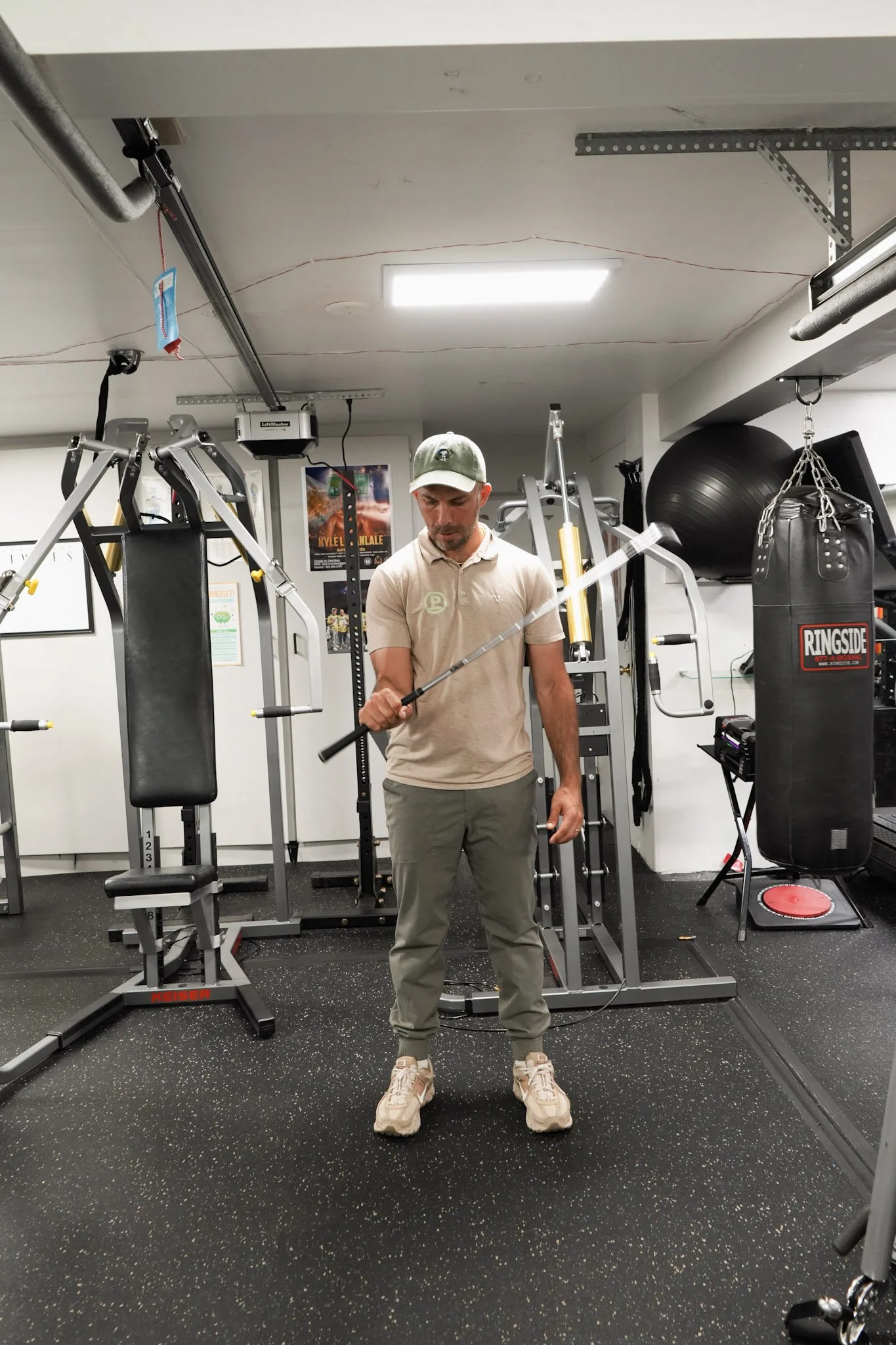
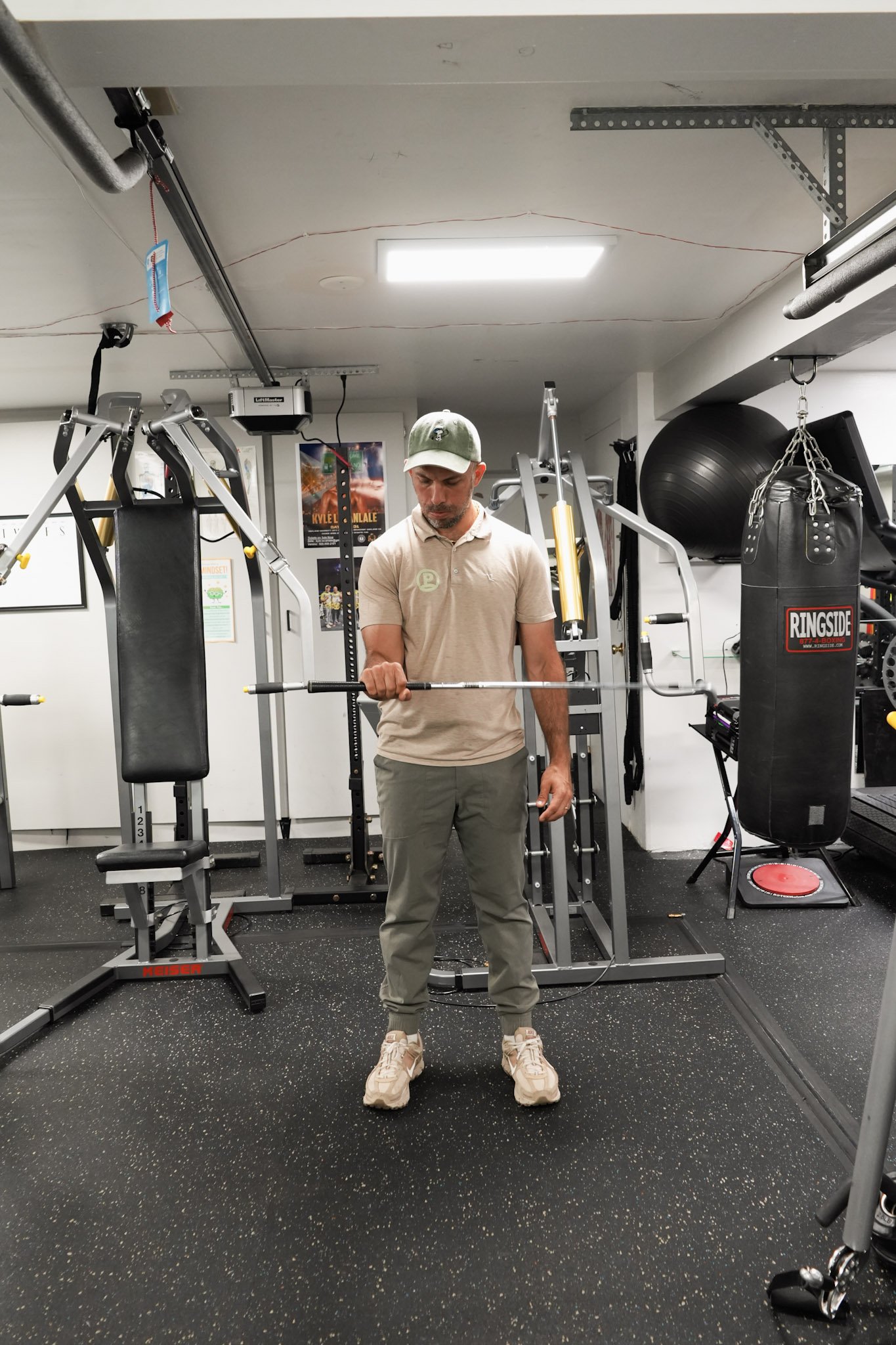
Grip and forearms: Farmer’s carries, wrist curls, and forearm rotation drills build durability.
Core and hips: A strong rotating trunk and powerful hips generate speed from the ground
Practice choices also matter:
Practice on grass when possible during high volume days.
Warm up wrists, forearms, and shoulders before hitting large buckets.
Reduce volume slightly when pain flares and build back gradually.
Why Consistency Matters More Than a Quick Fix
Tendons adapt slowly: Progressive loading over time drives long term change.
Your nervous system needs repetition: Eccentric and isometric work teaches the body to handle force more confidently.
Stopping when pain improves is not enough: Continuing strength work helps rebuild tendon capacity.
Helpful maintenance habits:
2–4 short forearm sessions per week using eccentric and isometric exercises.
2–3 weekly strength sessions focusing on shoulders, core, and grip.
Smart practice planning including warm ups and realistic volume.
Final Thoughts for Golfers
If your elbow hurts, it doesn’t automatically mean your body is broken or your golf days are over. Often it simply means the load placed on your elbow is higher than what it is currently prepared to handle. By understanding the causes of elbow pain, using proven training tools like eccentric and isometric exercises, strengthening the rest of your body, and practicing with better planning and consistency, you can give yourself a much better chance to swing freely and enjoy the game for years to come.